
Roofing across the City of Toronto, from century homes to new infill
Toronto's housing stock spans everything from early-1900s brick-and-beam construction to recent laneway and infill builds, and we adjust our assessment to the structure in front of us.
Email Us for a Free Estimate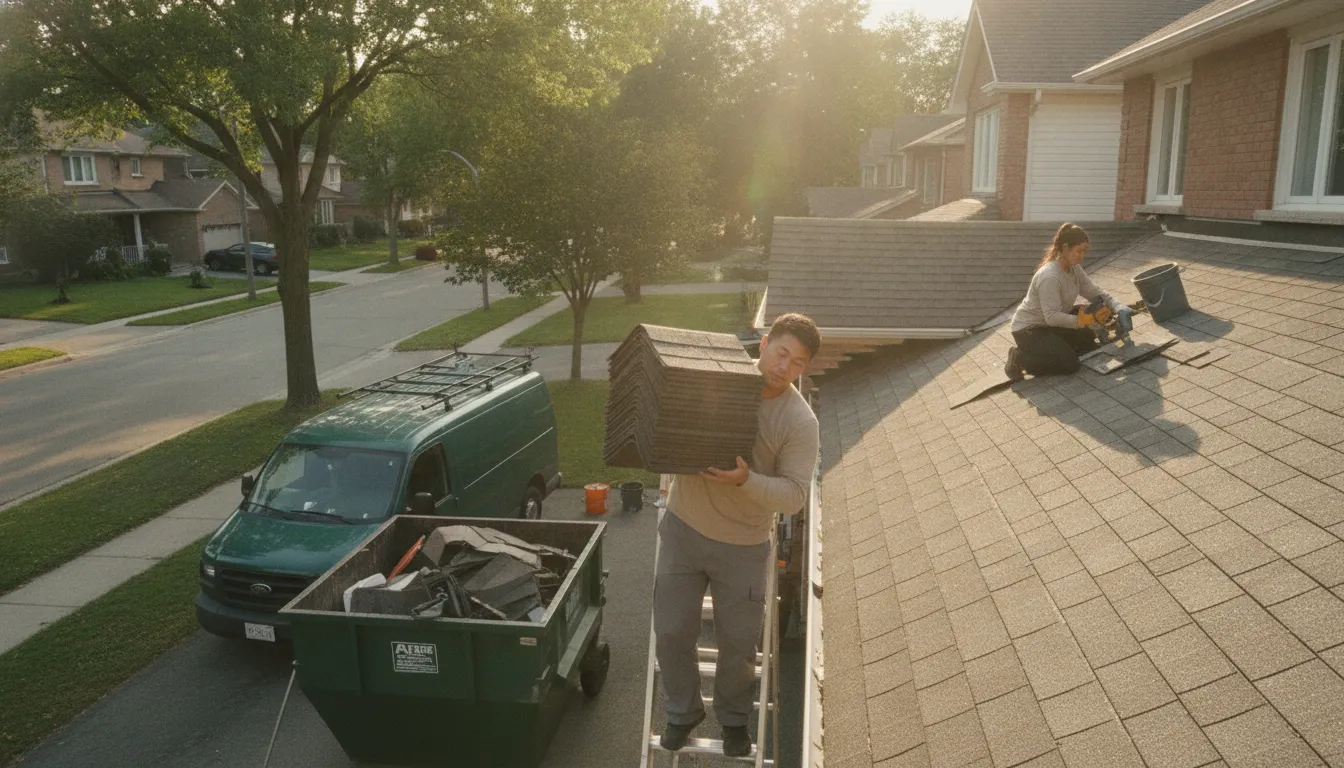
Roofing challenges specific to the City of Toronto
Toronto presents a wider range of roof conditions than most single municipalities in the GTA, because its housing stock spans more than a century of construction practices. Older homes in established neighbourhoods often have plank decking, minimal original ventilation, and multiple re-roofing layers, while newer infill and condominium-adjacent low-rise construction bring different ventilation and flat-roof detailing challenges.
Older housing stock
Homes built in the early-to-mid 1900s frequently have plank decking rather than plywood, and ventilation that was never designed to modern standards. We assess these roofs differently than newer builds.
Multiple roofing layers
Some older Toronto homes have two or more layers of shingles from past re-roofing. We check whether a tear-off to bare deck is warranted rather than adding a third layer.
Urban lot constraints
Narrow lots and close setbacks common in Toronto's older neighbourhoods affect staging and material access, which we plan for before scheduling.
Newer infill and low-rise builds
Recent construction often includes more complex roof lines and mixed slopes, requiring careful flashing detailing at multiple transitions.
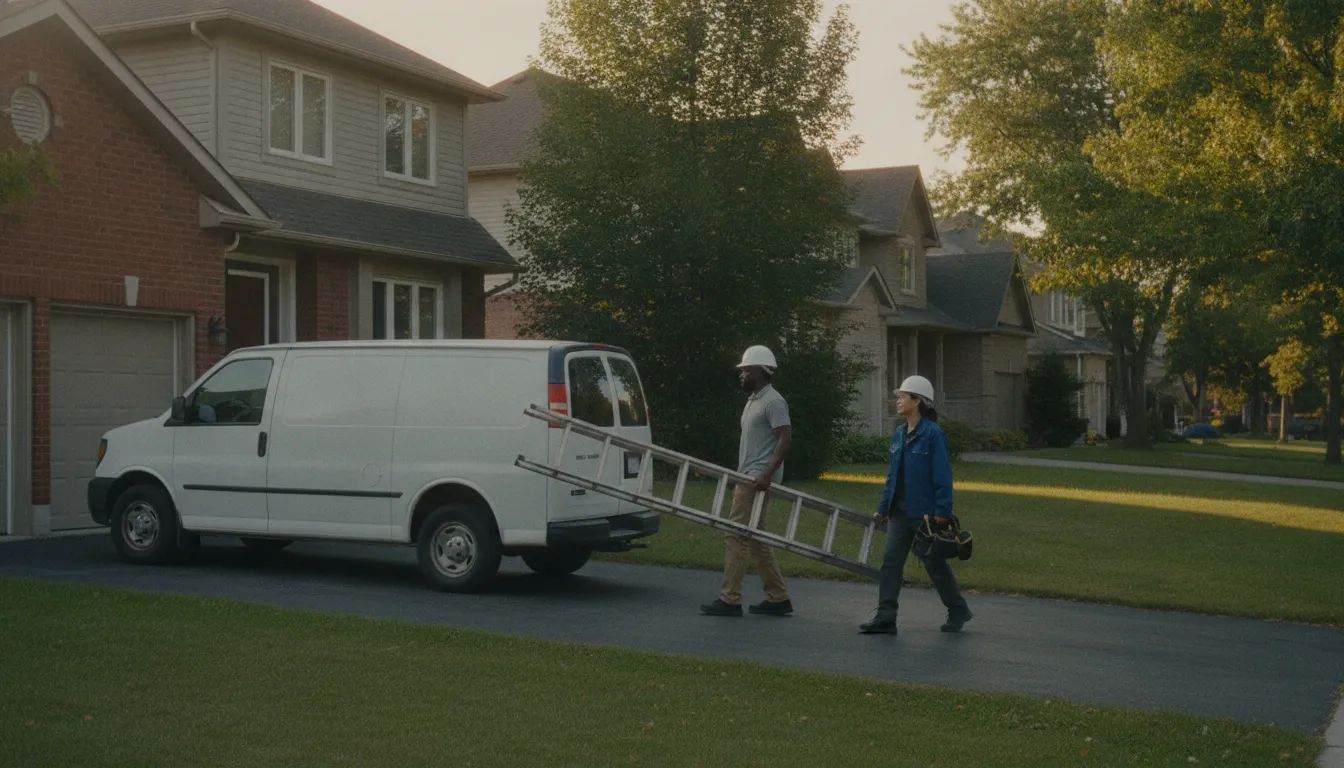
Layered re-roofing hides deck problems in older Toronto homes
In neighbourhoods with older housing stock, it's common to find a roof that's been re-shingled over an existing layer at least once. Each re-cover makes it harder to assess the deck underneath, and plank decking common to this era can develop gaps or soft spots that go unnoticed until a full tear-off exposes them.
We check layer count and deck condition before recommending a path
For older Toronto homes, we confirm how many shingle layers are present and whether local permitting and roof condition support another layer or call for a full tear-off to bare deck. Plank decking is inspected for gaps and soft spots, with sheathing added or replaced where needed to meet current code.
Why Toronto homeowners choose our approach
Toronto's building diversity means a one-size approach doesn't work — we adjust to what's actually there.
Experience with older housing stock
We know what to check for in early-1900s and mid-century Toronto homes, including plank decking and layered re-roofs.
Licensed & insured
All work in Toronto is carried out under active liability coverage.
Urban site planning
We plan material staging and access around narrow lots and tight setbacks common in the city.
Code-compliant layering decisions
We confirm whether an additional shingle layer is appropriate or whether a full tear-off is warranted.
Flashing expertise for complex rooflines
Newer infill builds with multiple roof planes get the same careful flashing detailing as older homes.
Written scope of work
You receive documented findings and a scope before any work begins.
How we approach a Toronto roofing project
The process adapts to the building's age and construction, but the sequence stays consistent.
- 1
Building-specific assessment
We identify the construction era and deck type before proposing any work, since this changes the approach significantly.
- 2
Layer and deck check
For older homes, we confirm existing shingle layer count and inspect deck condition, including plank gaps where relevant.
- 3
Scope and permitting review
Where a full tear-off or structural work is needed, we account for City of Toronto permitting requirements.
- 4
Site-planned installation
Material staging and access are planned around the property's lot constraints before work begins.
- 5
Final walkthrough
We review the completed work, including ventilation and flashing, before considering the project closed.
Common causes of roof issues we see across Toronto
These patterns come up repeatedly across the city's varied housing stock.
Deteriorated plank decking
Older homes with plank rather than plywood decking can develop gaps that undermine proper shingle fastening.
Insufficient original ventilation
Many early-1900s builds were never designed with balanced soffit-to-ridge ventilation, accelerating deck and shingle wear.
Multiple shingle layers
Layered re-roofing over the decades adds weight and can hide deck problems from view.
Flashing at complex urban rooflines
Additions and renovations common in Toronto homes create extra roof transitions where flashing is often improperly detailed.
Ice damming on north-facing slopes
Shaded, north-facing roof sections in dense urban lots retain snow longer, increasing ice-damming risk.
Aging flat-roof additions
Rear additions and porches with flat or low-slope roofs are common and require different membrane maintenance than the main pitched roof.
Toronto roofing questions
Do you work on older Toronto homes with plank decking?
Yes, we regularly assess and repair plank decking common in Toronto's older housing stock, replacing sections as needed to meet current standards.
Can I add a new shingle layer over my existing roof in Toronto?
It depends on how many layers are already present and the condition of the existing roof; we'll confirm what's appropriate during the assessment.
Do you handle roofing for laneway houses or infill builds?
Yes, we work on newer infill and laneway construction as well as established housing stock.
How do narrow city lots affect a roofing project?
They mainly affect material staging and site access, which we plan for ahead of scheduling to avoid delays.
Do you serve all areas within the City of Toronto?
Yes, we serve the City of Toronto as part of our broader Greater Toronto Area service area.
Coverage map
Communities We Serve in City of Toronto
City of Toronto is highlighted below — every community has its own local page, and we cover the rest of the GTA too.
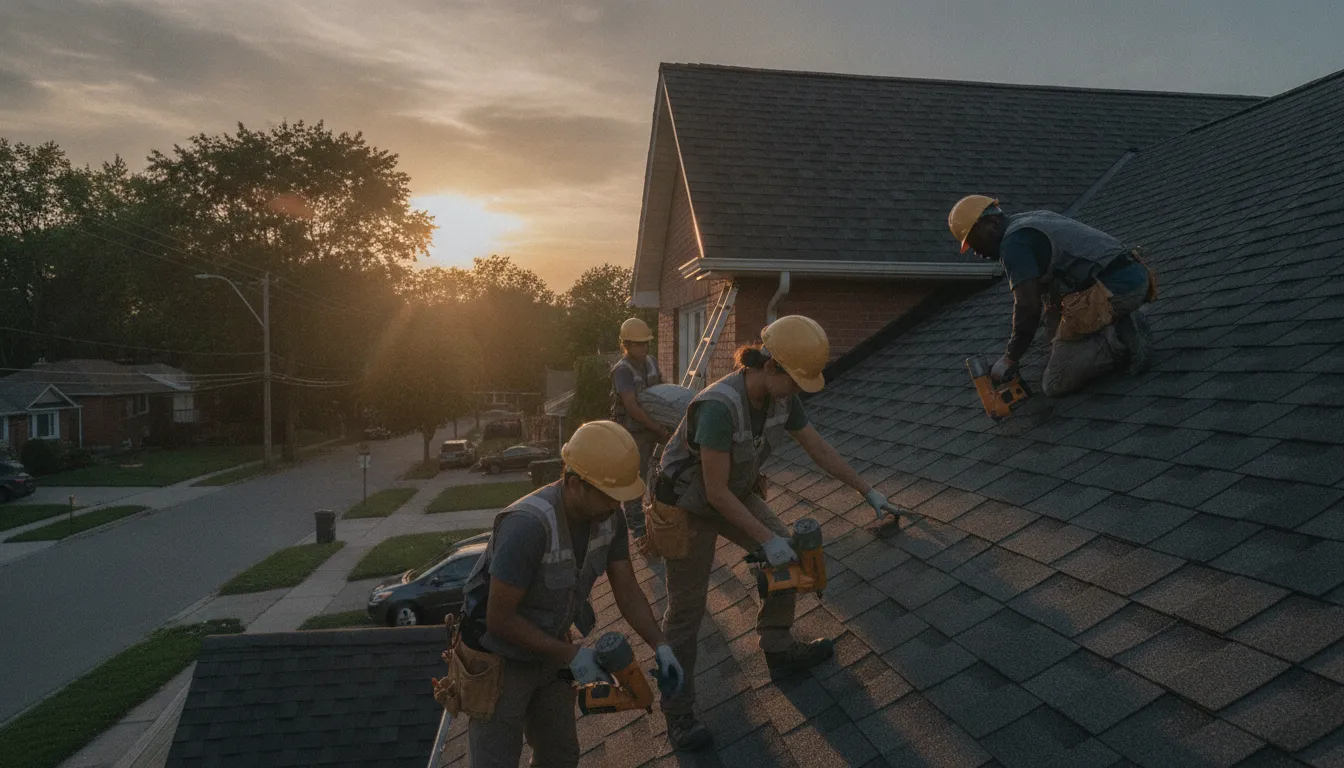
Get your Toronto roof assessed for its specific construction era
Email us your address and we'll schedule an on-site visit.
Email Us for a Free EstimateProudly Serving City of Toronto, ON
Local, on-time service throughout City of Toronto and the surrounding area.